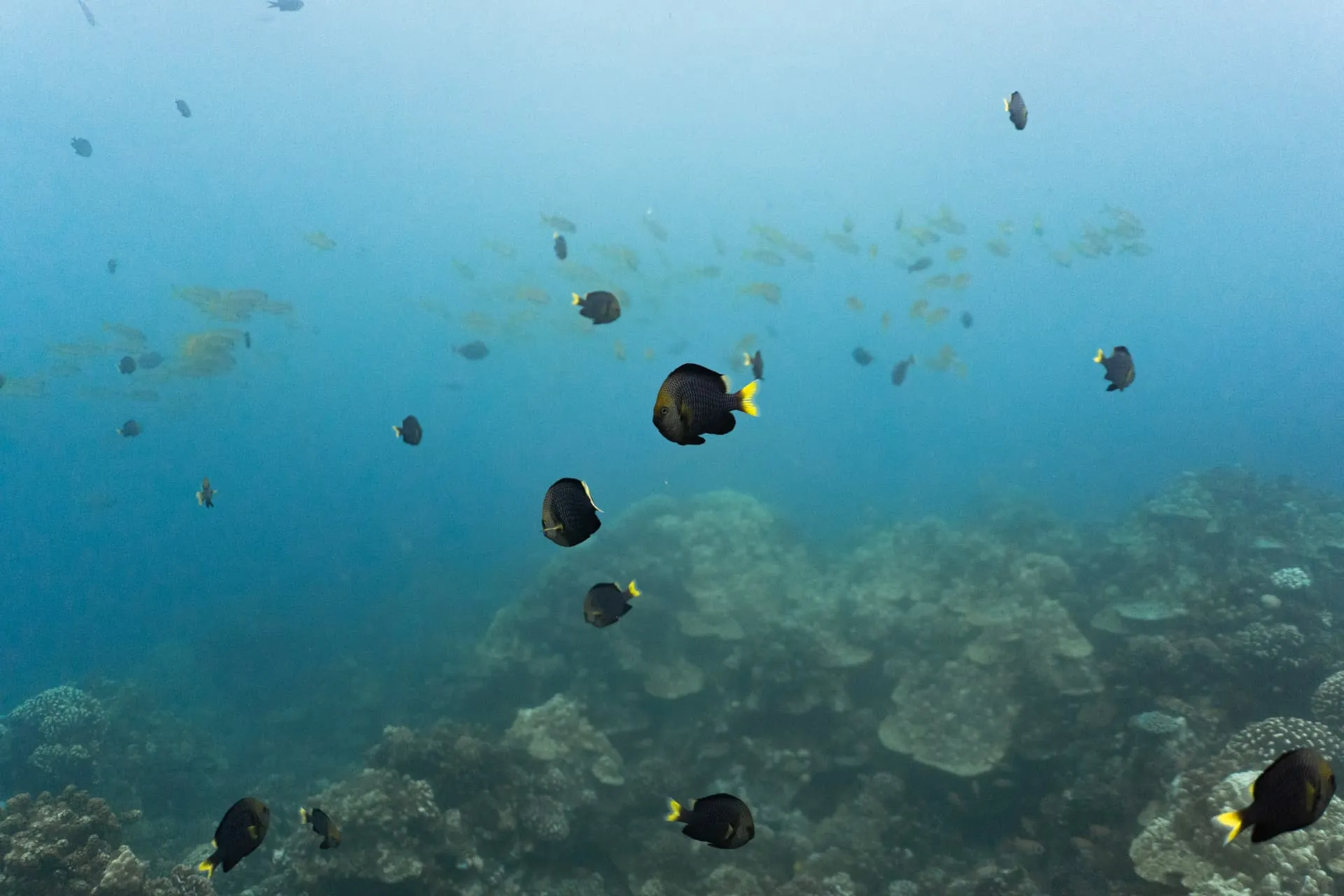
An Encounter with the Parata Shark
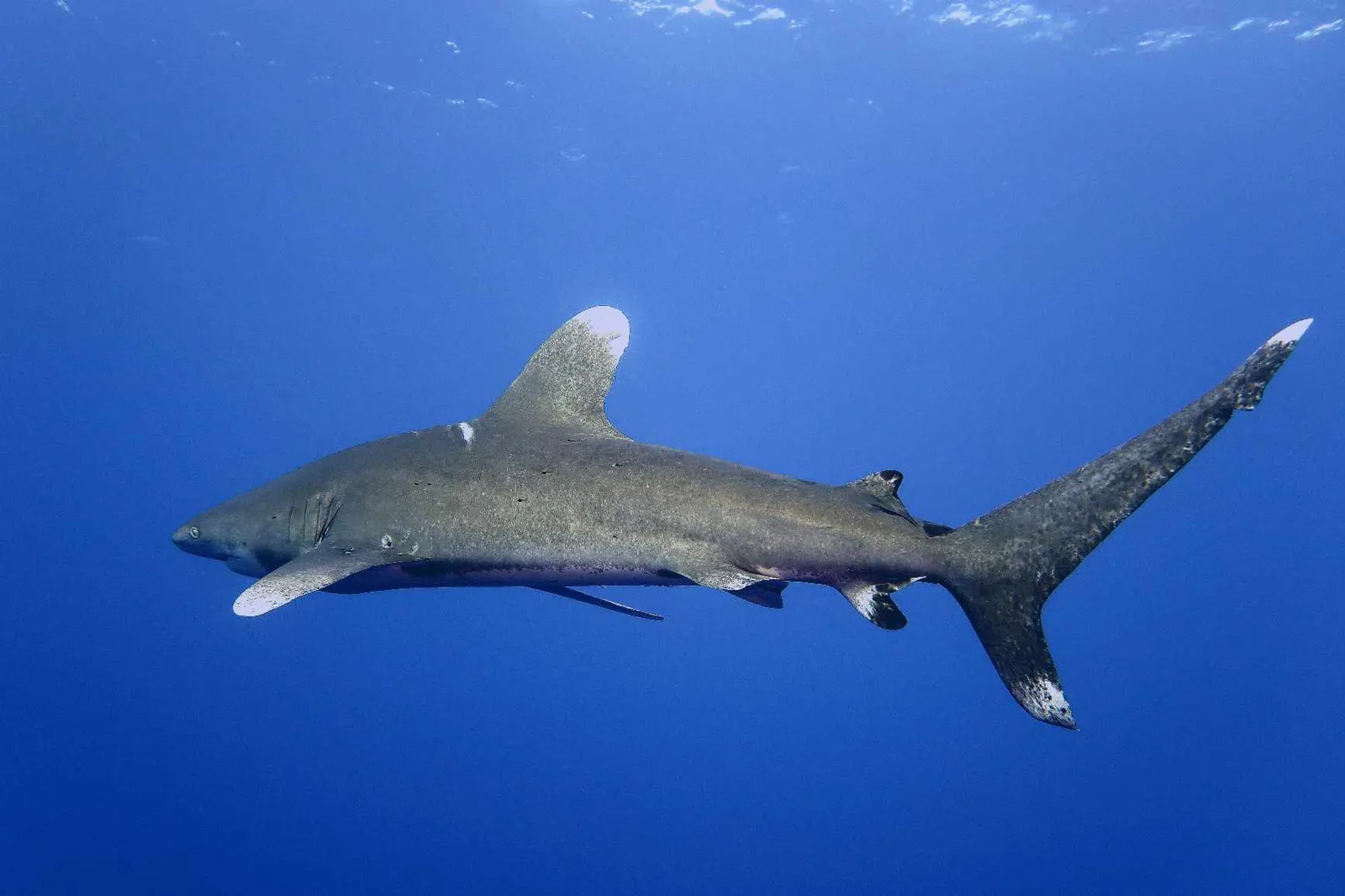
Photo : Daniel Benák, CC BY 4.0, Wikimedia Commons
Diving in Tahiti offers unforgettable experiences, including encounters with the mysterious oceanic whitetip shark, known locally as “Parata”. With its majestic presence in Polynesian waters, this predator inspires both admiration and fascination. This article introduces you to this extraordinary animal through key facts, figures and fascinating insights.
The Oceanic Whitetip Shark (Parata): What Is It?
The oceanic whitetip shark (Carcharhinus longimanus) is an iconic species in Tahiti. It stands out for its long, pointed pectoral fins and distinctive coloring, with white tips on its fins. In Tahiti, it is affectionately known as “Parata”.
Physical Characteristics
Size: Oceanic whitetip sharks typically measure between 2 and 3 m (10 ft) in length. The largest individuals can reach up to 4 m (13 ft).
Weight: They generally weigh between 60 and 170 kilograms.
Lifespan: In the wild, these sharks live for an average of 20 years, although some individuals may live longer.
Habitat and Distribution
The oceanic whitetip shark is found mainly in tropical and subtropical waters across all oceans. In Tahiti, it is commonly found in the open ocean, although it may occasionally venture close to coral reefs.
Behavior and Diet
Diet: The oceanic whitetip shark is an opportunistic carnivore. Its diet consists mainly of bony fish and cephalopods, and occasionally turtles and seabirds.
Social behavior: Unlike some other shark species, oceanic whitetips are often seen alone or in small groups. They are known for their curious nature and may approach divers closely.
Reproduction
Reproductive cycle: Oceanic whitetip sharks are viviparous, meaning their embryos develop inside the female’s uterus.
Gestation period: Gestation lasts around 12 months, after which the female gives birth to a litter of 1 to 15 pups.
Conservation Status and Threats
According to the International Union for Conservation of Nature (IUCN), the oceanic whitetip shark is classified as “Vulnerable”. The main threats to this species include commercial fishing, particularly for its fins, and the destruction of its natural habitats.
Interactions with Divers
In Tahiti, encounters with oceanic whitetip sharks, or Parata, are often the highlight of dive trips. Known for their curious nature, but also for being potentially dangerous, these sharks offer incredible opportunities for observation. However, respecting their space and following your dive guides’ safety instructions is essential for a safe and harmonious encounter.
Conclusion
The oceanic whitetip shark, or Parata, is undoubtedly one of Tahiti’s marine wonders. By combining in-depth knowledge with respectful diving practices, we can help conserve this fascinating species while continuing to enjoy the beauty and diversity of our oceans. So dive with us and discover the captivating world of the oceanic whitetip shark in Tahiti!