Tahiti’s Humpback Whales
Humpback whales, scientifically known as Megaptera novaeangliae, are fascinating creatures that draw thousands of marine life enthusiasts to Tahiti every year. In this article, we invite you to learn more about these majestic marine mammals, their migration, their diet, and some impressive facts and figures.
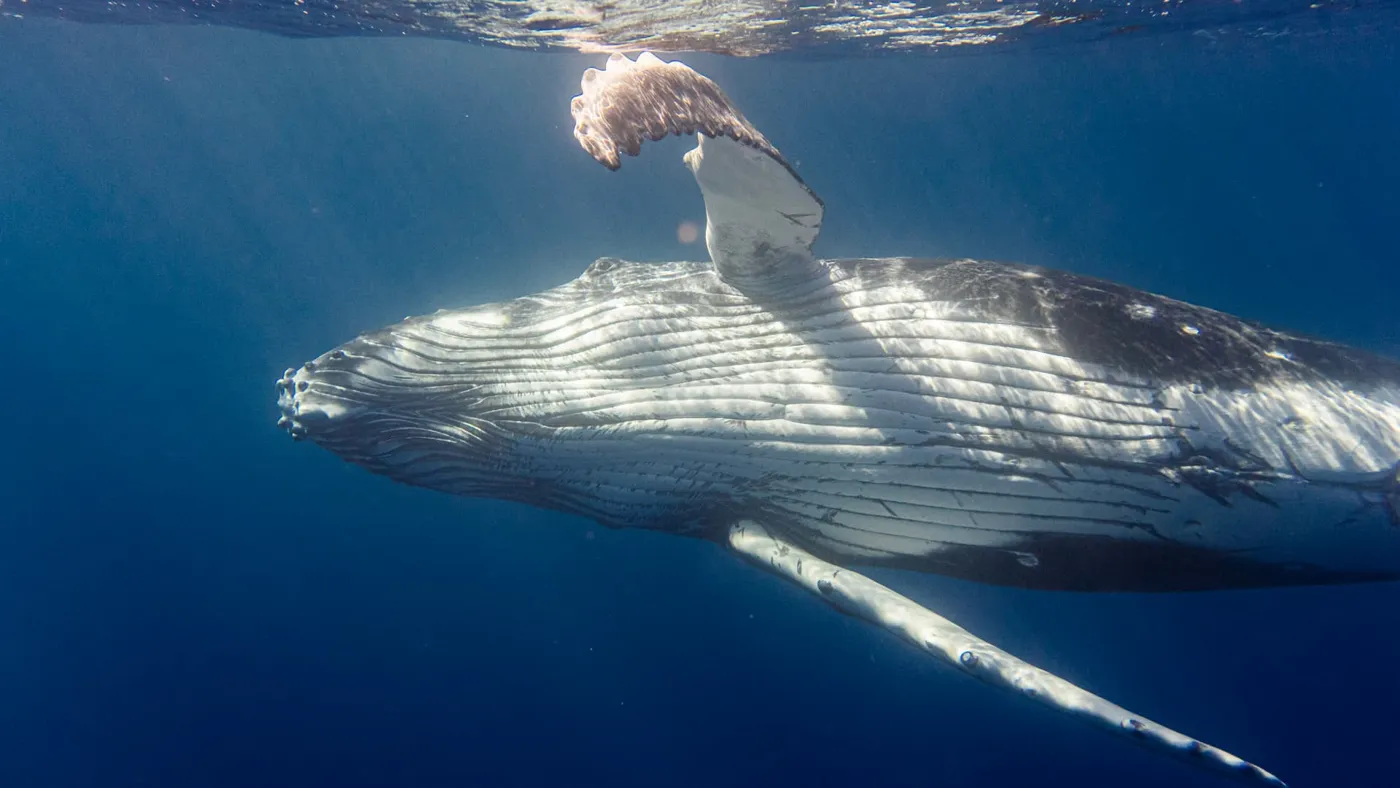
Humpback whales are cetaceans that can grow up to 16 m (50 ft) long and weigh between 25 and 30 tonnes. Their name comes from the small hump in front of their dorsal fin. They are also famous for their long pectoral fins, which can measure up to a third of their body length, and their incredible acrobatics, such as leaping out of the water.
Humpback whales undertake one of the longest migrations of any mammal. Every year, they travel around 5,000 kilometers from the cold waters of Antarctica to the warm waters of French Polynesia. The main purpose of this migration is to breed and give birth. The warm, shallow waters of Tahiti’s lagoons provide a safe environment for young whales, away from predators and harsh weather conditions.
Contrary to what you might expect, humpback whales do not feed in Polynesian waters. They feed mainly in Antarctic waters, which are rich in krill and small fish. An adult humpback whale can consume up to 1.5 tonnes of food a day during the feeding season. They use a distinctive feeding technique called “bubble-net feeding”, creating a circle of bubbles to trap fish before engulfing them.
Humpback whales reach sexual maturity between the ages of 5 and 10. Females give birth to a single calf every two to three years, after a gestation period of around 11 months. Newborn calves are around 4 to 5 m (16 ft) long and weigh up to 900 kg at birth. They nurse from their mothers for the first 6 to 12 months of their lives.
Humpback whales are known for their complex, melodic songs, which can last from 10 to 20 minutes and be repeated for hours. These songs are produced mainly by males and play a crucial role in communication and breeding. Songs can vary from one region to another and from one season to the next, and researchers continue to study their precise meaning.
Average Length: 12 to 16 m (50 ft)
Average Weight: 25 to 30 tonnes
Pectoral Fin Length: Up to 5 m (16 ft)
Lifespan: Around 50 years
Migration Speed: Around 8 km/h
Humpback whales play a crucial role in the marine ecosystem. As they migrate and feed, they help transfer nutrients between different ocean regions, supporting marine productivity. Their presence is also an indicator of the health of marine ecosystems.
Despite their protected status, humpback whales still face threats from various human activities, including illegal hunting, ship strikes, noise pollution, and habitat degradation. Conservation efforts are underway to protect these majestic creatures and their vital habitats.
By joining a whale-watching trip in Tahiti with Activiseas, you’ll not only have the chance to observe these ocean giants up close, but also help raise awareness and support the protection of these incredible marine mammals.